
Mainframe Agentic AI Architecture: How to Prep Big Tech for the AI Revolution
7/4/202615 min read
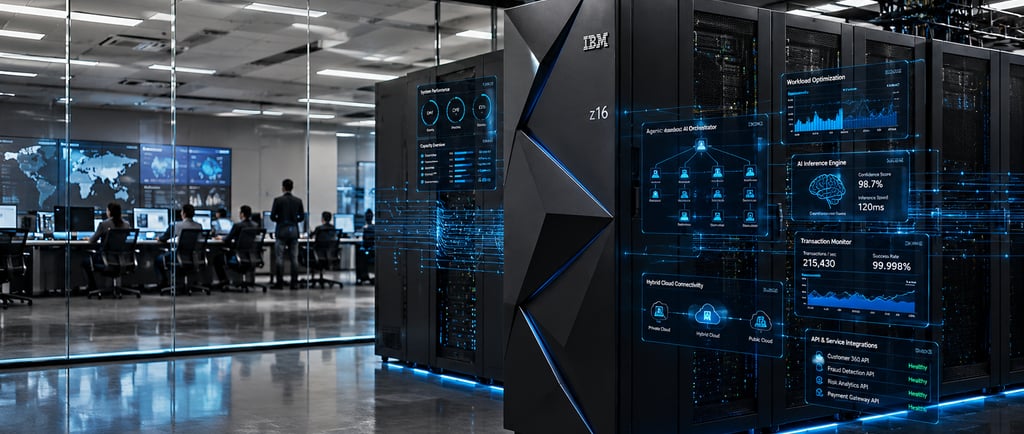
Could your organization’s most reliable legacy systems actually be the secret weapon for your future success? Many industry leaders view traditional computing environments as rigid, yet they hold the vast data needed to fuel modern innovation. By adopting a Mainframe Agentic AI Architecture, companies can finally bridge the gap between historical stability and cutting-edge intelligence.
This shift allows businesses to automate complex decision-making processes that were once manual. Modernizing your core systems is no longer just an IT upgrade; it is a strategic necessity for staying competitive in a digital-first economy. Implementing a robust Mainframe Agentic AI Architecture empowers your team to turn massive data sets into autonomous, actionable insights. Are you ready to transform your infrastructure into a powerhouse of efficiency?
Key Takeaways
Legacy systems provide a stable foundation for modern intelligent automation.
Integrating autonomous agents helps Big Tech maintain a competitive edge.
Modernization is essential for real-time, data-driven decision-making.
Strategic upgrades turn historical data into a future-proof asset.
Digital-first economies demand smarter, faster core computing processes.
The Evolution of Legacy Systems in the Age of Intelligence
The history of enterprise computing is defined by the steady evolution of the mainframe. For decades, these robust machines have served as the foundation of global commerce, processing billions of transactions with unmatched reliability. Today, they are transitioning from static record-keepers into dynamic hubs of intelligence.
Understanding the Modern Mainframe Context
Modern mainframes are far more than the monolithic boxes of the past. They now handle massive, real-time data streams while maintaining the highest levels of security and uptime. Organizations rely on these systems to manage complex, interconnected workflows that span across hybrid cloud environments.
This environment requires a new approach to data management. Because mainframes process critical financial and operational data, they must remain stable even as they integrate with advanced AI models. The goal is to preserve the integrity of legacy logic while enabling modern, intelligent decision-making capabilities.
Evolution of Enterprise Application Architectures
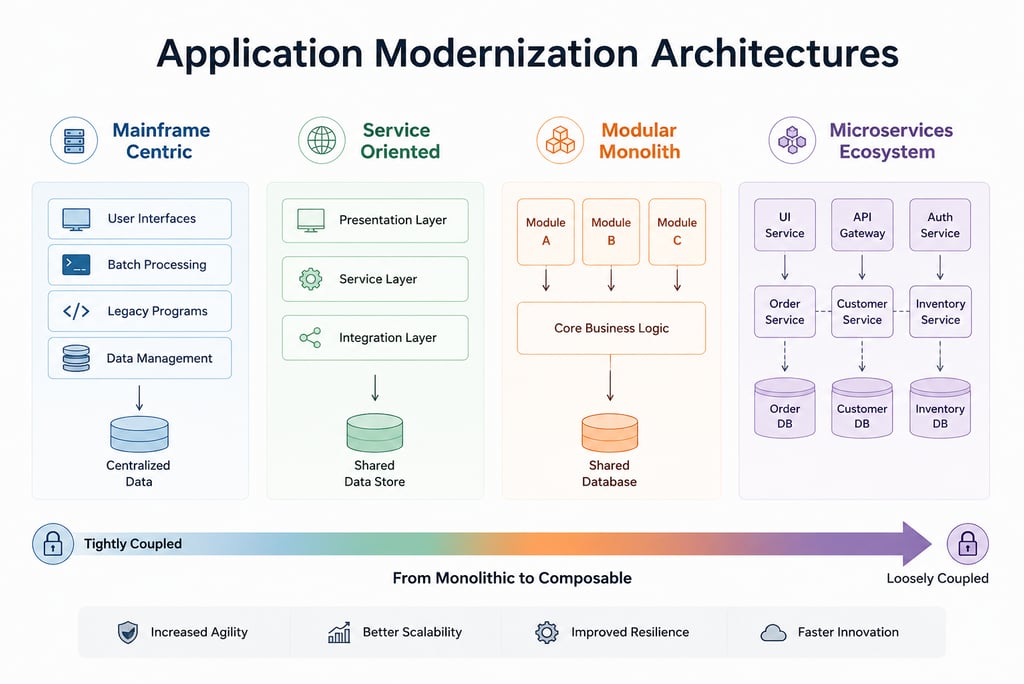
Modern enterprise applications rarely move directly from legacy mainframes to cloud-native microservices. Instead, organizations modernize incrementally by introducing modular architectures, service layers, and APIs while preserving mission-critical business logic. This phased approach minimizes operational risk, protects decades of investment, and creates a scalable foundation for AI-driven automation and hybrid cloud integration.
Figure 1. Evolution from tightly coupled legacy architectures to modular, service-oriented, and microservices-based enterprise applications. Each stage improves agility, scalability, and maintainability while preserving core business functionality.
As enterprises progress toward modular and composable architectures, they create the technical foundation required for Agentic AI. Modular services, standardized interfaces, and loosely coupled components enable AI agents to access enterprise data securely, automate workflows, and support intelligent decision-making without disrupting the reliability of existing mainframe systems.
Why Traditional Automation Falls Short
Traditional automation tools often rely on rigid, rule-based scripts. These systems work well for predictable, repetitive tasks but struggle when faced with the unpredictable nature of modern business data. When a process deviates from a pre-defined path, these older tools frequently fail or require manual intervention.
This lack of flexibility creates a bottleneck in high-volume environments. As data complexity grows, the limitations of static automation become clear. Enterprises need systems that can learn, adapt, and respond to new patterns without constant human oversight.
By moving toward agentic architectures, companies can overcome these historical limitations. This shift allows for autonomous problem-solving that keeps pace with the speed of the current digital economy. Embracing this change is essential for any organization looking to maintain its competitive edge.
Defining Mainframe Agentic AI Architecture
Defining the framework for a Mainframe Agentic AI Architecture is the first step toward modernizing high-stakes enterprise environments. This approach bridges the gap between decades of reliable transaction processing and the rapid decision-making capabilities of modern machine learning. By establishing a clear structure, organizations can ensure that their legacy investments remain relevant in an increasingly automated world.
Core Components of Agentic Systems
An effective Mainframe Agentic AI Architecture relies on four fundamental pillars. These components allow the system to perceive its environment, reason through complex logic, execute tasks, and retain institutional memory.
Perception: Real-time monitoring of system logs and transaction streams.
Reasoning: Utilizing neural networks to interpret patterns within massive datasets.
Action: Executing automated workflows based on predefined business rules.
Memory: Storing historical performance data to improve future decision-making.
"The future of enterprise computing lies not in replacing the old, but in wrapping it with the intelligence required to navigate modern complexity."
The Synergy Between COBOL and Neural Networks
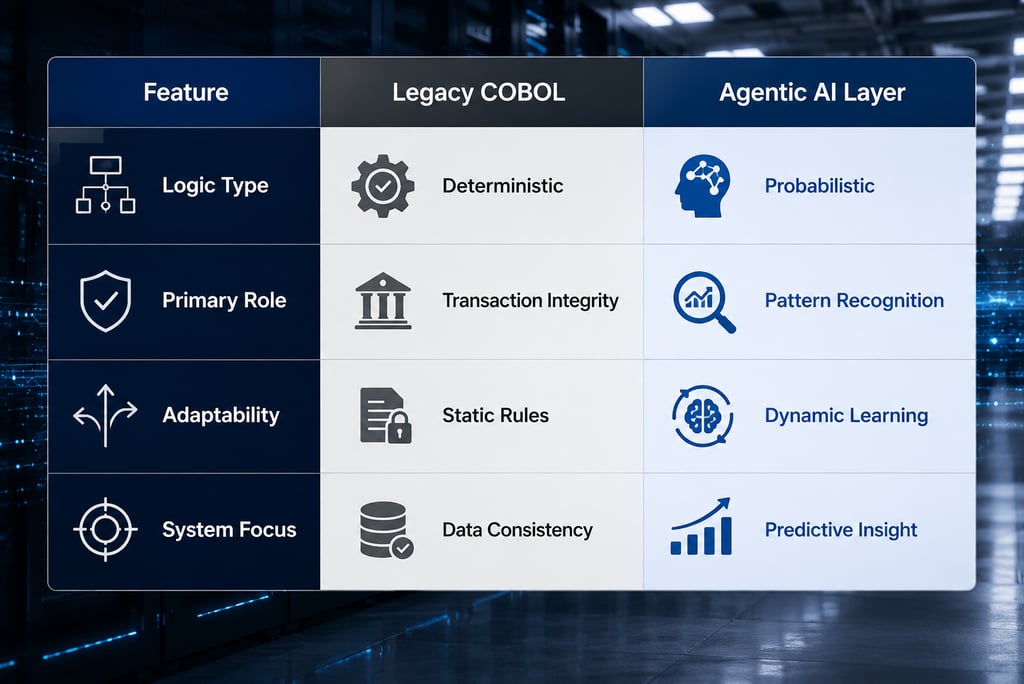
Many experts worry that legacy languages like COBOL cannot communicate with modern neural networks. However, a well-designed Mainframe Agentic AI Architecture treats COBOL as the bedrock of business logic while using AI as the intelligent interface. This synergy allows the system to maintain deterministic outcomes while benefiting from the flexibility of probabilistic models.
By integrating these two worlds, businesses can leverage the speed of the mainframe alongside the cognitive power of AI. This combination ensures that the Mainframe Agentic AI Architecture remains both stable and innovative. It is the ultimate path forward for organizations looking to scale their operations without sacrificing the reliability of their core systems.
Strategic Benefits of AI-Enabled Mainframe Technology
Adopting ai-enabled mainframe technology allows businesses to transform their legacy infrastructure into a high-speed engine for growth. By integrating intelligent layers into core systems, organizations can unlock performance levels that were previously considered impossible. This shift is not just about modernization; it is about creating a responsive environment that adapts to the demands of the digital economy.
https://www.youtube.com/watch?v=yLYKD5nXGvY
Accelerating Transaction Processing Speeds
In the world of high-frequency finance and global retail, every millisecond counts. AI-enabled mainframe technology optimizes data pathways, allowing systems to process millions of transactions with unprecedented precision. By predicting bottlenecks before they occur, these systems ensure that critical workflows remain fluid and uninterrupted.
Real-time predictive analytics for faster decision-making.
Reduced latency in complex multi-step transaction chains.
Dynamic load balancing to handle sudden traffic spikes.
Reducing Operational Overhead Through Autonomous Agents
Managing massive enterprise systems often requires significant manual intervention, which can be both costly and prone to human error. Autonomous agents act as a force multiplier, handling routine maintenance and system monitoring without constant oversight. This allows your IT teams to focus on high-value innovation rather than repetitive troubleshooting.
By leveraging these intelligent tools, companies can significantly lower their total cost of ownership. Efficiency gains are realized through smarter resource allocation, ensuring that computing power is always directed where it is needed most. Ultimately, this leads to a more resilient and agile enterprise architecture.
Key Agentic AI Design Principles for Enterprise Computing
When integrating autonomous agents into legacy environments, agentic ai design principles serve as the essential roadmap for success. These guidelines ensure that new technology respects the stability of existing infrastructure while unlocking modern capabilities. By following a structured approach, organizations can bridge the gap between traditional processing and intelligent automation.
Ensuring Deterministic Outcomes in Probabilistic Systems
Mainframe environments rely on predictable, repeatable results to manage high-stakes financial and operational data. Because AI models are inherently probabilistic, they can introduce uncertainty that conflicts with these strict requirements. Developers must implement guardrails that force AI outputs to align with predefined business logic.
By wrapping AI models in deterministic shells, engineers can validate every decision before it reaches the core system. This ensures that even if an agent suggests a path, the final execution remains within safe, tested parameters. Applying these agentic ai design principles allows businesses to harness the power of machine learning without sacrificing the reliability of their mission-critical workflows.
Maintaining Data Integrity and Security Protocols
Security remains the cornerstone of any enterprise deployment, especially when autonomous agents interact with sensitive datasets. Maintaining data integrity requires strict access controls and constant monitoring of agent behavior. Every action taken by an agent must be logged, audited, and verified against existing security policies.
Organizations should treat AI agents as privileged users within the network. By enforcing agentic ai design principles, teams can isolate agents within secure sandboxes to prevent unauthorized data access. This proactive stance protects the ecosystem from potential vulnerabilities while fostering a culture of responsible innovation.
Optimizing Mainframe Architecture for AI Workloads
Achieving peak performance in enterprise computing demands a strategic approach to mainframe architecture optimization. As organizations integrate machine learning into their core processes, the underlying hardware must evolve to handle massive data throughput. This transformation ensures that your systems remain both responsive and efficient under heavy computational loads.
Hardware Acceleration and Specialized Processing Units
Standard processors often struggle with the complex matrix math required by modern AI models. By incorporating specialized processing units, such as integrated AI accelerators, businesses can offload intensive tasks from the main CPU. This shift significantly reduces latency and improves overall system throughput.
These hardware enhancements allow for real-time data analysis without compromising the stability of legacy applications. Hardware acceleration is a game-changer for firms looking to scale their AI initiatives. It provides the raw power necessary to process vast datasets at lightning speeds while maintaining energy efficiency.
Balancing On-Premise Security with Cloud Connectivity
Effective mainframe architecture optimization also requires a delicate balance between local control and external flexibility. Many enterprises rely on hybrid models to tap into cloud-based AI services while keeping sensitive data on-premise. This approach protects your most valuable assets while enabling access to global innovation.
To achieve this, organizations must implement secure gateways that act as a bridge between the mainframe and the cloud. These connections ensure that data remains encrypted during transit and at rest. By prioritizing data integrity, you can confidently leverage cloud resources without exposing your core infrastructure to unnecessary risks.
Seamless AI Integration with Mainframe Systems
Achieving seamless ai integration with mainframe systems is the key to unlocking hidden enterprise value. By creating a unified environment, businesses can leverage decades of historical data while utilizing the speed of modern neural networks. This transformation requires a focus on reliable communication layers that respect the stability of core systems.
Middleware Solutions for Agentic Communication
Middleware serves as the vital bridge that allows agentic systems to talk to legacy software without disrupting daily operations. These solutions act as a translator, converting complex AI requests into formats that the mainframe can process efficiently. Robust middleware ensures that data flows securely and reliably between disparate environments.
Message Queuing: Enables asynchronous communication to prevent system bottlenecks.
Event-Driven Architecture: Triggers AI actions based on real-time mainframe updates.
API Gateways: Provides a secure entry point for external AI models to query internal data.
Bridging the Gap Between Legacy APIs and Modern AI Models
The challenge often lies in the difference between older interface standards and the flexible nature of modern AI. Developers must implement normalization layers to ensure that data remains consistent during the transition. This process allows for smooth ai integration with mainframe systems while maintaining strict security protocols.
y adopting these strategies, organizations can modernize their infrastructure without the risk of downtime. Strategic planning ensures that legacy assets remain the backbone of the enterprise while AI provides the intelligence needed for future growth.
Building AI-Driven Mainframe Applications
The shift toward intelligent computing begins with building AI-driven mainframe applications that bridge legacy reliability with modern agility. By integrating neural networks directly into core processing environments, companies can transform static data into actionable insights. This evolution allows businesses to handle massive transaction volumes with unprecedented precision.
Developing Intelligent Workflows for Financial Services
Financial institutions rely on high-speed processing to maintain a competitive edge in global markets. When building AI-driven mainframe applications, developers focus on creating workflows that can detect anomalies in real-time. These intelligent systems analyze patterns across millions of transactions to identify potential fraud before it impacts the bottom line.
By automating routine decision-making, these applications free up human experts to focus on high-value strategy. Efficiency gains are often immediate, as the system handles repetitive tasks without fatigue. This creates a more resilient financial ecosystem that adapts to changing market conditions instantly.
"The integration of artificial intelligence into core banking systems is not just an upgrade; it is a fundamental requirement for survival in the modern digital landscape."
Automating Compliance and Regulatory Reporting
Navigating the complex web of global financial regulations requires extreme accuracy and constant vigilance. Building AI-driven mainframe applications helps organizations automate the collection and validation of audit data. This approach significantly reduces the risk of human error, which is a common pain point in manual reporting processes.
These systems ensure that every transaction is logged and verified against current legal standards. By maintaining a continuous compliance posture, firms can avoid costly penalties and reputational damage. The following table highlights the shift from traditional manual methods to automated AI-driven workflows. Ultimately, the transition to automated systems empowers teams to manage regulatory burdens with confidence. As organizations continue building AI-driven mainframe applications, they establish a foundation for long-term growth and stability in highly regulated sectors.
Developing Robust Mainframe AI Infrastructure
Creating a robust mainframe ai infrastructure development strategy is the key to unlocking true enterprise intelligence. As organizations integrate autonomous agents into their core systems, the underlying hardware must be capable of handling massive data throughput. A well-architected environment ensures that your digital transformation remains stable and efficient.
Scalability Challenges in High-Volume Environments
Scaling AI workloads within a traditional environment often hits bottlenecks when data volume spikes. When you deploy distributed agentic networks, the system must manage thousands of concurrent requests without degrading performance. Effective scaling requires a modular approach that separates compute-heavy AI tasks from standard transaction processing.
To overcome these hurdles, consider the following strategies for your infrastructure:
Horizontal scaling of agent nodes to distribute the processing burden.
Implementation of high-speed interconnects to facilitate rapid data exchange.
Utilization of containerization to isolate AI workloads from legacy business logic.
Managing Latency in Distributed Agentic Networks
Latency is the silent enemy of real-time AI decision-making. In a distributed network, every millisecond spent moving data between the mainframe and the AI model can impact the final outcome. Successful mainframe ai infrastructure development focuses on minimizing these delays through intelligent data placement and optimized communication protocols.
By keeping AI models closer to the data source, you significantly reduce the time required for inference. Prioritizing low-latency pathways allows your agents to react to market changes or security threats instantly. This responsiveness is essential for maintaining a competitive edge in high-frequency financial or operational environments.
Ultimately, investing in a high-performance architecture ensures that your systems remain agile. By addressing these infrastructure needs early, you build a foundation that supports long-term growth and innovation.
Implementing Agentic AI Solutions for Mainframe Computing
Deploying agentic ai solutions for mainframe computing is a complex task that demands precision and strategic planning. Organizations must move beyond simple automation to create systems that can reason, adapt, and execute tasks autonomously within highly secure environments. Success hinges on a methodical approach to model selection and the rigorous training of agents on internal business rules.
Selecting the Right LLM Frameworks for Enterprise Data
Choosing an appropriate Large Language Model (LLM) framework is the foundation of any successful deployment. You must prioritize frameworks that offer robust security features and can handle the high-throughput demands of enterprise data. It is essential to evaluate whether a framework supports on-premise hosting to maintain strict data sovereignty.
Compatibility with existing middleware is another critical factor for agentic ai solutions for mainframe computing. Look for frameworks that provide seamless integration with established APIs and data structures. This ensures that your AI agents can communicate effectively with legacy databases without requiring a complete overhaul of your current architecture.
Training Agents on Proprietary Mainframe Logic
Once you have selected a framework, the next step involves teaching the agents your specific business logic. Mainframe environments often rely on decades of custom code and unique procedural workflows that standard models do not inherently understand. Fine-tuning these models on your proprietary datasets is necessary to ensure high accuracy and reliability.
Many enterprises find success by using Retrieval-Augmented Generation (RAG) to ground their agents in real-time mainframe data. This approach allows the AI to reference current system states and historical logs before making decisions. By combining domain-specific training with live data access, you can build highly effective agentic ai solutions for mainframe computing that drive real business value.
Advanced Mainframe AI Automation Strategies
Modern enterprises are increasingly adopting mainframe ai automation strategies to maintain a competitive edge in a fast-paced digital economy. By moving away from reactive troubleshooting, organizations can now embrace a proactive stance toward system health. This shift ensures that critical business processes remain uninterrupted even under heavy load.
Self-Healing Systems and Predictive Maintenance
The core of modern resilience lies in the ability of a system to identify and resolve issues before they impact the end user. Self-healing systems utilize machine learning models to monitor log files and performance metrics in real time. When an anomaly is detected, the system can automatically trigger corrective scripts to restore stability.
Predictive maintenance takes this a step further by analyzing historical data to forecast potential hardware or software failures. By identifying patterns that precede a crash, IT teams can perform preventative maintenance during scheduled windows. This approach significantly reduces the risk of unexpected downtime and extends the lifespan of legacy components.
Dynamic Resource Allocation for Peak Demand Periods
Managing high-volume environments requires a flexible approach to computing power. Effective mainframe ai automation strategies allow for the intelligent distribution of resources based on current demand. During peak periods, the system automatically shifts processing capacity to high-priority tasks without requiring manual intervention from administrators.
This dynamic allocation ensures that service level agreements are consistently met, even during sudden traffic spikes. By optimizing resource usage, companies can also reduce operational costs associated with over-provisioning. Ultimately, these automated workflows create a more efficient and responsive environment that adapts to the needs of the business in real time.
Overcoming Cultural and Technical Barriers to Adoption
The transition to agentic AI within legacy systems is often hindered more by human hesitation than by technical limitations. While the hardware and software capabilities exist to revolutionize mainframe operations, the human element remains the most critical factor for success. Organizations must address these internal hurdles to unlock the full potential of their computing infrastructure.
Upskilling Mainframe Talent for the AI Era
Your existing team possesses deep, institutional knowledge that is irreplaceable. Rather than replacing these experts, the goal should be to augment their skills with modern AI literacy. By providing structured training paths, you turn long-term employees into the architects of your new AI-driven ecosystem.
Focus on bridging the gap between traditional procedural programming and probabilistic AI models. Encourage your staff to explore how agentic workflows can handle routine tasks, freeing them to focus on high-level system design and strategic oversight. This shift in responsibility often leads to higher job satisfaction and better retention rates.
Managing Change in Risk-Averse Corporate Environments
Mainframe-heavy enterprises are often built on a foundation of extreme stability and risk avoidance. Introducing AI can feel disruptive to teams accustomed to rigid, predictable processes. To succeed, leadership must foster a culture that views experimental agility as a form of risk management rather than a threat to stability.
Start with small, low-risk pilot programs that demonstrate immediate value without disrupting core transaction processing. Transparent communication regarding the goals of these projects helps alleviate anxiety among staff. When employees see that AI acts as a force multiplier for their own productivity, resistance naturally gives way to enthusiasm.
Conclusion
The shift toward agentic intelligence marks a pivotal moment for global organizations. Companies like IBM and Broadcom lead this transition by proving that legacy hardware can power the next generation of digital innovation. Your path forward relies on a blend of technical precision and a commitment to evolving your internal culture.
Strategic planning serves as the bedrock for these complex deployments. You must align your infrastructure goals with the realities of modern data demands. This proactive approach ensures that your core systems remain resilient while gaining the agility needed to compete in a fast-paced market.
Success requires more than just new software. It demands a workforce ready to embrace change and master emerging tools. By investing in your people and refining your technical architecture, you turn traditional systems into a dynamic engine for growth. Start your transformation today to keep your enterprise at the forefront of the digital revolution.
FAQ
What exactly is mainframe agentic AI architecture and why does it matter for Big Tech?
Mainframe agentic AI architecture refers to the integration of autonomous, goal-oriented AI agents directly into the powerful processing environments of systems like IBM Z. It matters because it allows large enterprises to move beyond simple automation toward intelligent decision-making, ensuring that legacy systems can handle the speed and complexity of the modern digital economy.
Why is ai-enabled mainframe technology better than traditional rule-based automation?
Traditional automation is often rigid and struggles with the high-velocity, unstructured data found in today’s markets. By adopting ai-enabled mainframe technology, organizations gain a system that learns and adapts. Unlike old-school scripts, these agentic AI solutions can navigate complex workflows and provide a level of enterprise longevity that static tools simply cannot match.
Can modern neural networks really work alongside legacy languages like COBOL?
Absolutely! One of the core agentic ai design principles is creating a technical synergy between established languages and modern AI. By building bridges between COBOL-based logic and neural networks, companies can leverage their existing, reliable codebases while adding a layer of advanced intelligence to drive innovation.
What are the primary business benefits of mainframe architecture optimization for AI?
When you focus on mainframe architecture optimization, the most immediate benefits are a significant reduction in operational overhead and a massive boost in transaction processing speeds. Autonomous agents can handle routine tasks and resource allocation, allowing your human talent to focus on high-value strategic initiatives.
How do you maintain security when pursuing ai integration with mainframe systems?
Security is paramount. Effective ai integration with mainframe systems involves strict data integrity protocols and the use of specialized hardware acceleration. By keeping sensitive AI processing on-premise while using secure cloud connectivity for hybrid tasks, enterprises can ensure deterministic outcomes and protect their most valuable data assets.
What is involved in building ai-driven mainframe applications for highly regulated industries?
Building ai-driven mainframe applications for sectors like financial services involves creating intelligent workflows that prioritize accuracy. These applications are particularly effective for automating compliance and regulatory reporting, which minimizes the risk of human error and ensures that the organization remains audit-ready at all times.
What are the biggest hurdles in mainframe ai infrastructure development?
The most common challenges in mainframe ai infrastructure development are managing latency and ensuring scalability. In high-volume environments, AI-driven decisions must happen in real-time. This requires a robust infrastructure that can distribute agentic workloads efficiently across the network without bottlenecking critical system functions.
How should a company begin implementing agentic ai solutions for mainframe computing?
The best way to start with agentic ai solutions for mainframe computing is by selecting the right Large Language Model (LLM) frameworks that fit your specific data needs. From there, you must train your agents on your proprietary mainframe logic to ensure they understand the unique nuances of your business's core operations.

Contact
Copyright © 2026 XWEBI Services LLC. All Rights Reserved. XWEBI Services LLC is an independent subsidiary of MDOTKANE™ LLC. | Privacy Policy | Terms of Service | Refund Policy
📞 +1-217-741-7014
✉️ xwebi@xwebi.net mdotkane@mdotkane.com
📍 4078 Stagecoach RD, Springfield, IL 62707, USA
🕐 Mon–Fri, 9AM–6PM CST
Navigation
Legal
XWEBI SERVICES LLC
BRIDGING LEGACY & MODERN SYSTEMS
Enterprise consulting specializing in mainframe modernization, hybrid cloud engineering, and IT security for mission-critical infrastructures.